
Lower Layers
Oobe games llcStrategy
3.817.00 Reviews
- Version
- 1.1.5
- Installs
- 10.00K
- Age Rating
- Teen
Screenshots
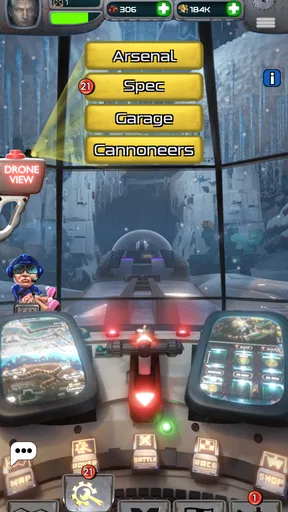
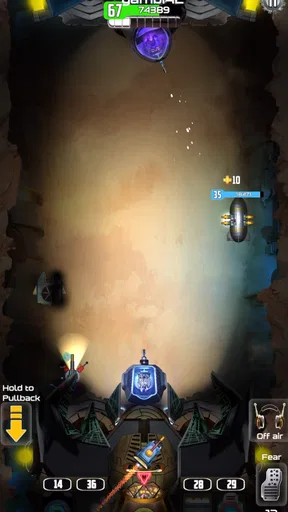
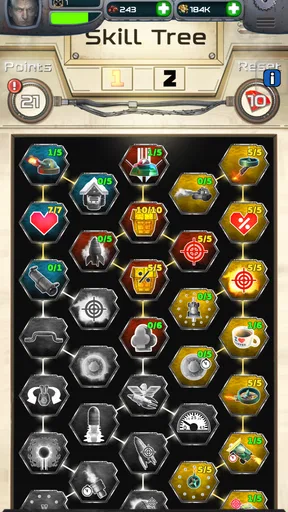
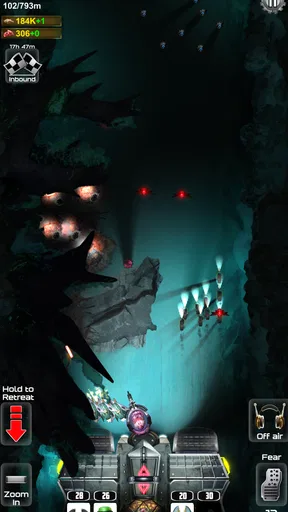
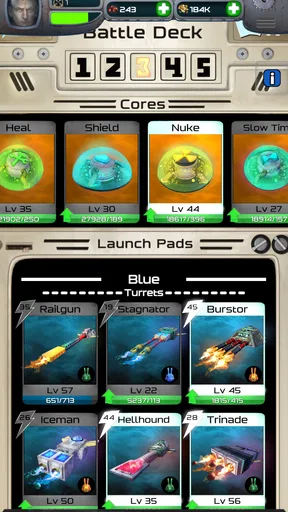
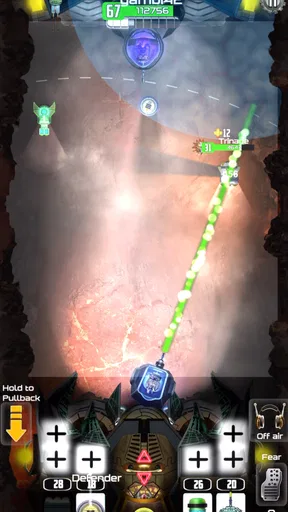
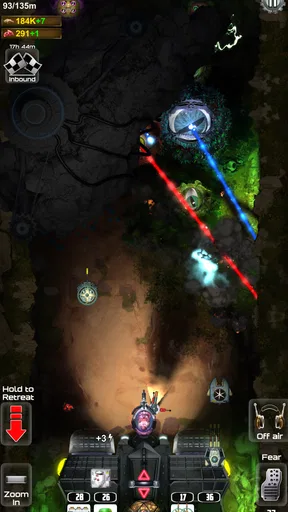
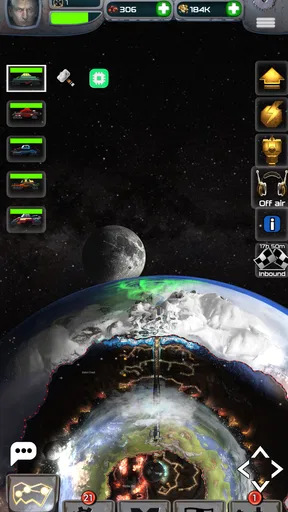
Our Review of Lower Layers
 Analysis by Appyee
Lower Layers is a strategy game built around the idea of combining player-versus-player combat with progress that continues through an AFK-style approach. I spent time with it expecting a lightweight game I could check in short bursts, and that is where it makes the most sense. It is not trying to replace a deep, traditional strategy title with long planning sessions; instead, it asks you to make meaningful decisions around the moments when you are actively playing, then let the broader progression carry some of the workload between visits.
That balance is the game’s most important capability. The appeal is not simply that it can be played casually, but that it puts PvP strategy and reduced hands-on time in the same loop. I can make a few choices, watch how those choices perform against other players, and return later without needing to treat every session as a major commitment. For anyone who likes competitive games but dislikes being tied to the screen, that arrangement is immediately attractive.
Developed by Oobe games llc, the game is available free of charge and is aimed at a Teen audience. It has reached over ten thousand installs, with an average score of 3.8 from around eighty-five ratings and seventeen written reviews. Those figures suggest a small but visible player base rather than a massive mainstream community, so I would approach it as a focused game for people curious about its particular blend of combat and idle progression.
Why the AFK strategy idea matters here
In many strategy games, the main obstacle is not understanding the rules; it is finding enough uninterrupted time to use them. A conventional PvP game expects you to be present for each important exchange. An idle game usually removes much of that pressure but can also make the player feel like an observer. Lower Layers sits between those two experiences. Its central promise is that active decisions still matter, while the game is more forgiving when you put your phone down.
In practice, I found this most useful when I treated each visit as a planning checkpoint. Rather than opening the game with the expectation of playing continuously, I approached it by asking what needed attention: whether my current approach was working, whether I should change the way I prepared for the next encounter, and whether my accumulated progress justified another adjustment. That mindset makes the game feel more like an ongoing strategy project than a sequence of isolated matches.
The distinction is important because AFK mechanics can easily become an excuse for shallow design. Here, the value depends on how much control the active portion gives you. If you want a game where every second is filled with manual commands, this format may feel too restrained. If you enjoy making a decision, observing its consequences, and returning later to refine it, the slower rhythm is much more comfortable.
What a normal session feels like
My most useful sessions were short and deliberate. I would open the game, review the current state, identify the part of my approach that seemed weakest, and make one or two changes rather than touching everything at once. That last habit matters. When several decisions are altered together, it becomes difficult to understand which change helped or hurt. Treating each return as a small experiment makes the progression easier to read.
This also gives the AFK side a practical purpose. Time away from the game is not merely empty space between matches; it becomes a chance to see whether the previous setup was stable. A strong result encourages me to preserve the approach for longer, while a poor result tells me that the next session should focus on correction rather than random upgrades. That is a more satisfying use of idle progress than simply collecting rewards and repeating the same action.
New players should resist the temptation to judge the game during the first few minutes. The concept becomes clearer after several check-ins, when the relationship between active choices and unattended progress starts to emerge. I would also recommend playing without rushing into purchases. The free entry point is enough to decide whether the rhythm suits you, and that is more important than trying to accelerate a system you may not enjoy.
How it differs from familiar strategy alternatives
Compared with a traditional real-time strategy game, Lower Layers asks for less constant attention and offers less of the satisfaction that comes from directly controlling every moment. Compared with a standard turn-based strategy game, it is less about carefully resolving one complete battle at a time and more about maintaining a longer-running competitive setup. Against a pure idle game, its PvP focus gives your decisions a clearer opponent and a stronger reason to revisit the game.
That middle position is both its identity and its limitation. Players who want detailed maps, extensive tactical movement, or long-form campaigns may find the experience too compact. Players who enjoy idle games only because they require almost no thought may find the competitive element more demanding than expected. The best match is someone who wants strategy to remain present without requiring a full evening of concentration.
Using it well in everyday life
The clearest use case is a fragmented day. Imagine checking your phone during a commute, between classes, or during a lunch break. You have enough time to inspect your progress and make a considered adjustment, but not enough time for a lengthy competitive session. Lower Layers fits that situation better than a game that punishes you for leaving after a few minutes. The game’s AFK-oriented structure lets the short visit have a purpose even when you cannot stay online.
I also see value for players who like competition but become tired of reaction-heavy games. PvP does not automatically mean frantic play. In this format, the important question is often whether your preparation is sound, not whether your reflexes are faster than another person’s. That makes the game a reasonable choice for someone who enjoys comparing decisions and outcomes but does not want a demanding action game.
A useful routine is to give each session a single goal. One visit might be about understanding why recent encounters went poorly. Another might be about testing a more conservative approach. A third could simply be a collection and review session. This prevents the game from turning into aimless tapping and helps reveal whether your choices are actually improving your results. It is a small habit, but it makes the limited information available in a short session more useful.
Another non-obvious strength is that the game can work as a low-pressure introduction to competitive strategy. Someone who normally avoids PvP because of the time commitment may be more willing to try a system where active involvement is intermittent. The competitive layer still gives decisions consequences, but the AFK structure creates breathing room to learn. That does not make the game effortless, yet it reduces the intimidation of entering a fully manual competitive environment.
Where the friction appears
The main trade-off is that less active control can also mean less immediate excitement. If you prefer to win because of a perfectly timed action or a rapid response, the game may leave you wanting more direct influence. The satisfaction comes from preparation and adjustment, so the payoff can feel delayed. I would not recommend it to someone seeking constant spectacle or a highly expressive combat system.
The competitive design may also make experimentation feel risky. In a purely solo strategy game, an unusual choice can be entertaining even when it fails. In PvP, failure can feel like wasted progress, especially when you are still learning what the game expects from you. My solution was to change one part of my approach at a time and keep expectations modest. That turns losses into information instead of treating every result as a verdict on the whole setup.
There is another practical consideration: the game is free to start but includes optional purchases ranging from ninety-nine cents to ninety-nine dollars and ninety-nine cents per item. I would treat those purchases as a convenience decision, not as part of the basic test. Anyone sensitive to spending in competitive games should set a personal limit before playing, particularly if faster progress begins to feel tempting. The free download makes sampling easy, but free entry does not mean every possible shortcut is free.
The Teen content rating is also worth keeping in mind for families. A parent deciding whether to install it for a younger player should review the game in that context rather than assuming that a strategy label automatically makes it suitable for children. For adult players, the rating is simply a reminder that the competitive presentation and themes are not positioned as a young-child experience.
Small habits that improve the experience
Use the first few visits to observe patterns instead of trying to optimize everything immediately. The game is easier to understand when each change has a clear reason.
Keep a simple mental note of what you changed before leaving. When you return, you can connect the result to the decision instead of guessing.
Do not confuse more frequent checking with better strategy. The point of the AFK structure is to reduce pressure, so constant refreshing can undermine the advantage of the format.
Test the free experience before considering purchases. If the basic rhythm does not feel satisfying, spending more will not solve the underlying mismatch.
These habits are especially useful because the game’s greatest strength is not a single flashy feature. It is the relationship between a small active decision and the time that follows. If I make that relationship explicit, each session has a clearer purpose. If I simply open the game and collect whatever is available, the experience becomes much less distinctive.
Who gets the most from this design
Lower Layers is best suited to a player who wants casual competitive strategy rather than a full-time competitive routine. You will probably appreciate it if you like checking progress several times a day, thinking about why an approach worked, and letting a game continue in the background while you handle other responsibilities. It is also a good fit for players who enjoy the idea of PvP but do not want every match to demand complete attention.
I would be more cautious about recommending it to players who need a large amount of content before they settle in. The game has a relatively modest public footprint, and its focused concept will appeal more strongly to people who already know they like AFK progression. If you are looking for a broad strategy sandbox, a campaign with extensive storytelling, or a highly manual battle system, a conventional strategy alternative will probably serve you better.
The current release is version 1.1.5 and supports devices running Android 7.1 or later. That makes it accessible to many older Android phones, although the quality of the experience will still depend on the individual device and how comfortable you are with the game’s interface. I would install it on a secondary device only if I were already interested in the concept; the platform requirements are welcoming, but compatibility alone does not change the game’s deliberate pace.
For someone deciding whether to try it, my advice is simple: give the free version enough time for the AFK loop and the PvP decisions to connect. Do not judge it as a traditional battle game, and do not play it as a completely passive idle title. Its best moments happen in the middle, when you make a choice, step away, return to inspect the result, and use that information to shape the next choice.
After reviewing it, I see Lower Layers as a focused experiment in making competitive strategy fit around an ordinary schedule. It does not eliminate the compromises of AFK design, and it will not satisfy players who want constant manual control. But for me, the combination works when I treat the game as a series of thoughtful check-ins rather than an endless session. My recommendation is to try it if your ideal strategy game gives you decisions to make without demanding all of your attention.
Lower Layers is therefore worth considering for patient players who enjoy gradual improvement, light competitive pressure, and a game that can sit alongside the rest of the day. Its strongest feature is also the clearest test: if you enjoy seeing how a decision develops while you are away, it may become a comfortable part of your routine. If you need immediate control and constant action, I would choose a more traditional strategy game instead.
Verdict
Strengths of Lower Layers
- Helps explain networking concepts from the physical to application layers.
- Useful as a quick reference for students and beginners.
- Organizes complex technical topics into easy-to-follow sections.
- Can support study sessions without requiring constant internet access.
- Practical examples make abstract network functions easier to understand.
Limitations of Lower Layers
- Some explanations may feel too basic for experienced network professionals.
- Technical terms can still require prior knowledge to understand fully.
- Limited interactive exercises may reduce hands-on learning value.
- Content may not reflect the latest networking standards or technologies.
- The interface can feel text-heavy during longer study sessions.
Similar Picks in This Category
View All
Clash of Clans
Supercell4.5

Plants vs. Zombies™
ELECTRONIC ARTS3.7

Lords Mobile: Kingdom Wars
IGG.COM4.5

Clash Royale
Supercell4.4

State.io — Conquer the World
CASUAL AZUR GAMES4.1

Car Driving School : Car Games
Spark Game Studios3.9
Frequently Asked Questions
What is Lower Layers, and what can I do with the app?
Lower Layers is an application focused on exploring and working with layered content, making it useful for users who want to view, organize, or interact with information arranged in separate levels. Its exact tools may vary by platform and version, so it is worth checking the app’s description before downloading. During use, pay attention to the available menus, supported formats, and whether its features match your specific workflow.
Is Lower Layers free to download and use?
Lower Layers may be available as a free download, but users should review the store listing carefully because some features can depend on in-app purchases, subscriptions, advertising, or a paid version. The download price and payment conditions may also differ between Android and iOS. Before installing, check the current pricing, trial terms, renewal policy, and whether essential functions are accessible without paying.
Is Lower Layers compatible with my Android or iPhone?
Compatibility depends on the operating system, device model, and minimum software version required by the developer. Before downloading Lower Layers, open its official Google Play or App Store page and compare the listed requirements with your phone or tablet. Older devices may experience slower performance, limited functionality, or installation problems, while newer operating-system updates can occasionally affect how the app behaves.
Does Lower Layers require an internet connection or an account?
Whether Lower Layers works fully offline depends on the feature you are using. Basic viewing or local functions may work without a constant connection, while synchronization, online content, updates, or cloud-based tools may require internet access. The app may also request an account for saving preferences or accessing certain features. Review its permissions and sign-in requirements so you know what information is involved.
Is Lower Layers safe, and what permissions does it request?
As with any application, download Lower Layers only from an official app store and verify the developer name, reviews, update history, and privacy information. During installation or first launch, check permissions involving storage, photos, notifications, network access, or other device features. Some permissions may be necessary for core tools, but you should be cautious if the requested access seems unrelated to the app’s purpose.
Play our best games!


